All Categories
Featured
Excitement About Creating Post-Debt Budget for Permanent ...
Rumored Buzz on What When is the Right Time to Consolidat...
Rumored Buzz on What When is the Right Time to Consolidate Debt for Relief? : APFSC Typically Charge
Table of Contents
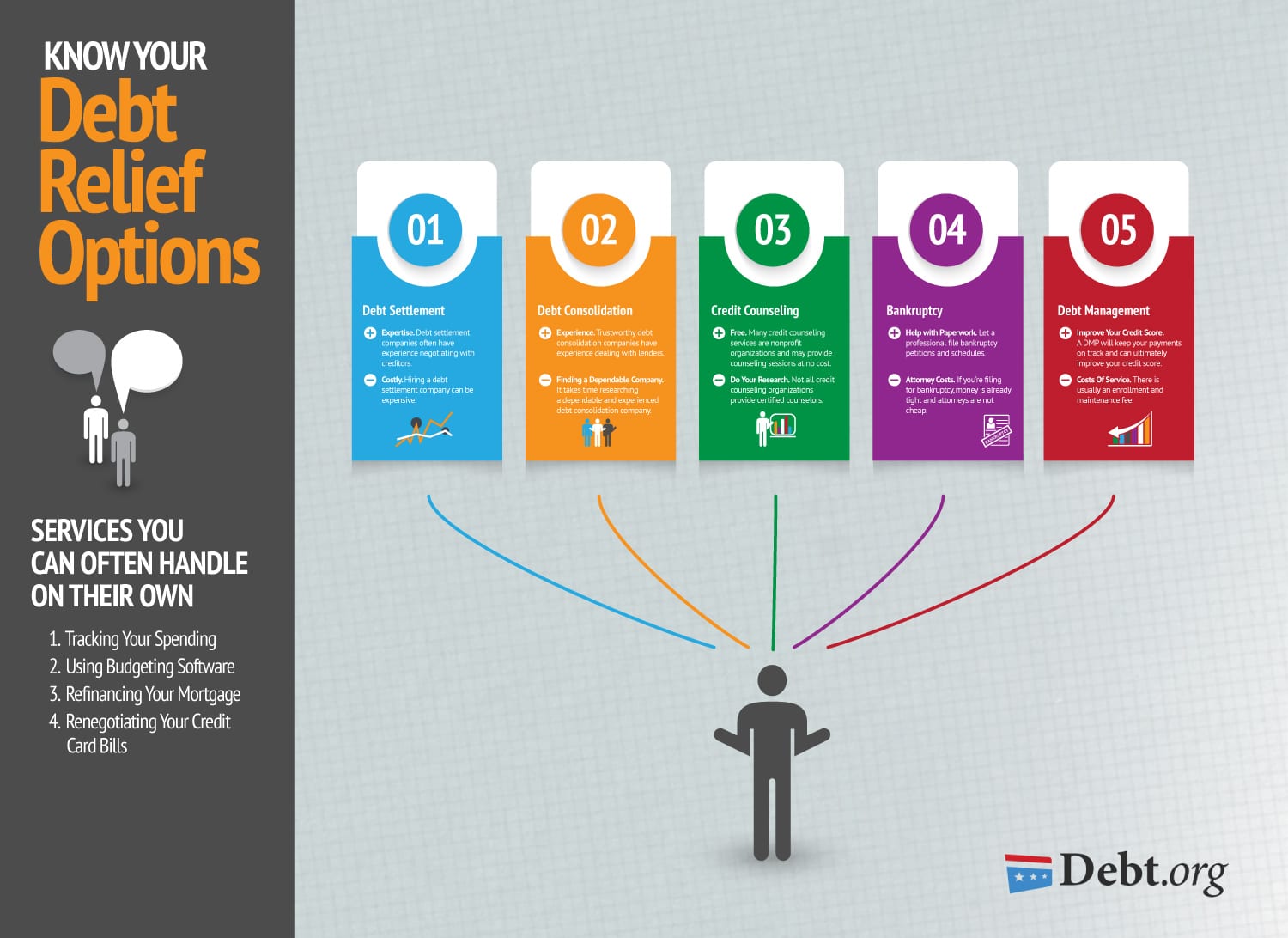
That liberates money in the short term, and you might have three to 4 years to save toward the settlement quantity. Very damaging to credit report, largely due to missed out on settlements and an adverse "worked out" mark that could remain on your credit rating report for up to 7 yearsMay be just choice if various other alternatives (financial debt consolidation, equilibrium transfer charge card, financial debt forgiveness) aren't possibleTypically requires a cost to the 3rd party, which could counter some or all of the financial savings from financial debt settlementMay help you avoid insolvency if you've missed numerous paymentsNot all creditors function with financial obligation settlement firms Financial obligation mercy may be appropriate for you if you are experiencing a financial hardship that makes it virtually difficult to pay down your financial debt equilibriums.

With a DMP, you make one month-to-month payment to the credit scores therapy firm. Those funds are after that dispersed to lenders of your unsecured financial obligations, such as bank card and installment fundings. The company collaborates with your financial institutions to lower rate of interest rates or forgo charges, however some lenders might decline such giving ins.
It can aid you pay down financial obligation if you're able to safeguard a car loan rate that's reduced than the typical price of the accounts you're settling. You should refrain from racking up debt on those freshly cleared accounts or your financial debt can grow also higher.
That gives you plenty of time to eliminate or dramatically decrease your balance while making interest-free repayments.
Not known Factual Statements About Preventing the Old Patterns After Your Fresh Start
You might need it if your lender or a collection firm ever attempts to gather on the debt in the future. The letter might confirm you don't owe what the collection agency's records reveal. Yes, in most cases, the internal revenue service takes into consideration forgiven debt as gross income. When a lender forgives $600 or even more, they are needed to send you Kind 1099-C.
Financial debt forgiveness or settlement usually hurts your credit rating. Anytime you work out a debt for much less than you owe, it might appear as "cleared up" on your credit rating report and influence your credit rating for 7 years from the date of settlement. Your credit history can also go down considerably in the months causing the mercy if you fall back on repayments.
The Buzz on Protecting Yourself from Unethical Schemes
This scenario often results from underreporting earnings, not submitting returns on time, or inconsistencies located during an IRS audit. The consequences of building up tax obligation financial obligation are significant and can include tax obligation liens, which offer the IRS a lawful case to your residential property as safety for the financial obligation.
Greater rate of interest on readily available credit scores. Wages and Bank Accounts IRS can levy (confiscate) salaries and savings account to please the financial obligation. Lowered earnings and disturbance of crucial economic procedures. Property Seizure In extreme situations, the IRS can take and sell residential or commercial property to cover the financial debt. Loss of valuable assets and possible displacement.
Depression, stress and anxiety, and other psychological wellness issues. Social Preconception Encountering lawsuit from the IRS can bring social stigma. Damages to reputation and relationships. Work Opportunities An inadequate credit score as a result of strain financial debt can limit employment possibility. Problem searching for or keeping a work. Federal government Benefits Tax obligation financial debt may impact eligibility for federal government benefits, such as Social Security and Medicaid.
A Biased View of Steps to Take Following When is the Right Time to Consolidate Debt for Relief? : APFSC
The OIC considers several elements, including the taxpayer's income, expenditures, property equity, and capability to pay. Effectively working out an OIC can be intricate, requiring a comprehensive understanding of the IRS's guidelines and a solid disagreement for why your offer aligns with your capability to pay. It is essential to note that not all applications are accepted, and the process needs detailed economic disclosure.
The IRS assesses your general monetary scenario, including your earnings, expenses, asset equity, and capacity to pay. You must also be present with all declaring and payment demands and not remain in an open personal bankruptcy proceeding. The internal revenue service likewise considers your conformity history, reviewing whether you have a document of prompt declaring and paying taxes in previous years.
The Ultimate Guide To Why Bankruptcy Counseling Makes a Difference
The application procedure for an Offer in Compromise involves numerous in-depth actions. First, you need to finish and submit internal revenue service Type 656, the Offer in Concession application, and Kind 433-A (OIC), a collection info declaration for people. These forms require detailed financial details, including details about your revenue, financial debts, expenditures, and properties.
Back taxes, which are overdue taxes from previous years, can significantly enhance your total internal revenue service financial debt otherwise attended to without delay. This debt can accrue passion and late repayment penalties, making the original amount owed a lot bigger in time. Failure to repay taxes can cause the IRS taking enforcement actions, such as issuing a tax obligation lien or levy against your building.
It is important to attend to back taxes as soon as possible, either by paying the total owed or by organizing a payment strategy with the internal revenue service. By taking proactive actions, you can prevent the build-up of additional passion and charges, and avoid more aggressive collection activities by the internal revenue service.
One usual factor is the idea that the taxpayer can pay the total either as a round figure or through a settlement strategy. The internal revenue service likewise takes into consideration the taxpayer's income, expenditures, property equity, and future earning capacity. If these aspects indicate that the taxpayer can afford to pay more than the offered quantity, the internal revenue service is most likely to decline the deal.
See This Report on How to Never Repeat the Old Patterns After Debt Relief
Dealing with IRS debt can be complex and complicated. Tax experts, such as Certified public accountants, tax obligation lawyers, or signed up agents, can give indispensable aid.

Table of Contents
Latest Posts

Excitement About Creating Post-Debt Budget for Permanent Stability

The Single Strategy To Use For Developing Your Debt Relief Roadmap

Regulatory Considerations in Bankruptcy Proceedings Fundamentals Explained
More
Latest Posts
Excitement About Creating Post-Debt Budget for Permanent Stability
The Single Strategy To Use For Developing Your Debt Relief Roadmap
Regulatory Considerations in Bankruptcy Proceedings Fundamentals Explained