All Categories
Featured
Excitement About Creating Post-Debt Budget for Permanent ...
Rumored Buzz on What When is the Right Time to Consolidat...
5 Easy Facts About Their Team Method with Families Shown
Table of Contents
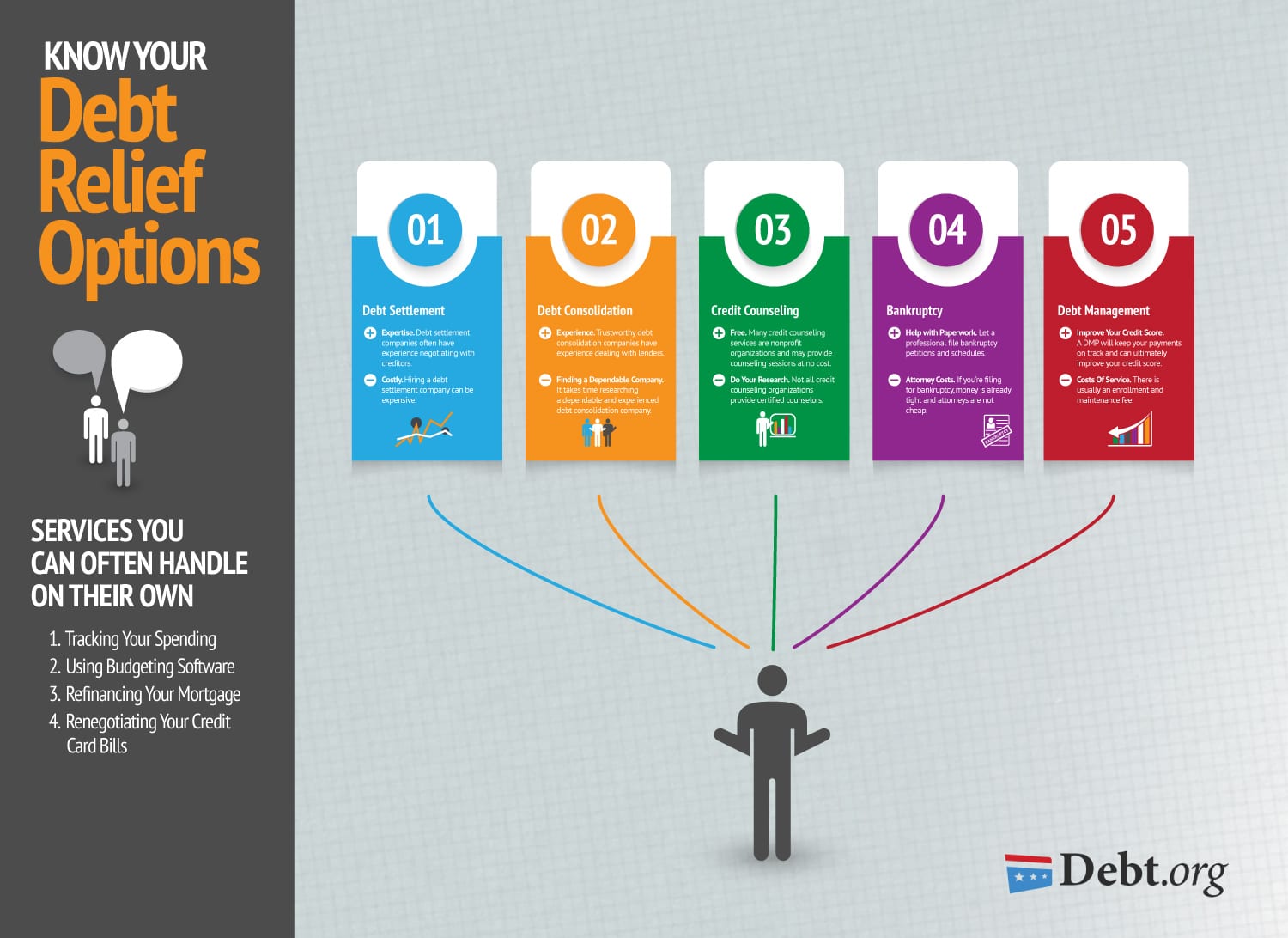
That maximizes money in the short term, and you might have 3 to 4 years to conserve toward the settlement amount. Extremely damaging to credit report, mainly because of missed out on payments and an unfavorable "worked out" mark that could remain on your credit rating report for up to 7 yearsMay be only choice if other alternatives (financial obligation consolidation, balance transfer credit scores cards, financial obligation forgiveness) aren't possibleTypically calls for a cost to the 3rd party, which could balance out some or every one of the financial savings from financial obligation settlementMay assist you stay clear of bankruptcy if you have actually missed out on numerous paymentsNot all financial institutions deal with debt negotiation companies Financial debt forgiveness may be ideal for you if you are experiencing a financial challenge that makes it nearly difficult to pay down your financial debt balances.
With a DMP, you make one monthly repayment to the debt therapy agency. Those funds are then distributed to lenders of your unprotected debts, such as bank card and installment financings. The firm collaborates with your lenders to lower rates of interest or forgo fees, yet some lenders may reject such concessions.
It can help you pay down financial obligation if you're able to safeguard a funding rate that's reduced than the average price of the accounts you're settling. You have to abstain from racking up financial debt on those freshly removed accounts or your debt can expand also greater.

That offers you plenty of time to eliminate or significantly decrease your balance while making interest-free settlements.
The 10-Second Trick For Non-Profit Relief Programs Reviewed
You might require it if your lender or a collection firm ever tries to collect on the financial debt in the future. When a loan provider forgives $600 or even more, they are called for to send you Type 1099-C.
Financial obligation forgiveness or negotiation generally injures your credit report. Anytime you resolve a financial debt for less than you owe, it may appear as "worked out" on your debt record and affect your credit report for seven years from the day of settlement. Your debt can likewise drop significantly in the months resulting in the mercy if you fall back on repayments.
The 10-Minute Rule for Regulatory Changes That Could Transform Bankruptcy Options
This circumstance typically results from underreporting revenue, not filing returns on time, or disparities located throughout an IRS audit. The repercussions of gathering tax obligation financial obligation are severe and can consist of tax obligation liens, which give the Internal revenue service a lawful claim to your home as safety and security for the financial obligation.
Greater rates of interest on readily available credit scores. Earnings and Financial institution Accounts internal revenue service can impose (seize) earnings and savings account to please the financial obligation. Reduced earnings and interruption of vital financial processes. Property Seizure In extreme instances, the internal revenue service can seize and market building to cover the financial debt. Loss of valuable possessions and possible variation.
Social Preconception Dealing with legal action from the Internal revenue service can bring social stigma. Employment Opportunities A poor credit history score due to tax financial debt can restrict work opportunities. Government Advantages Tax obligation financial obligation may affect qualification for government advantages, such as Social Safety and Medicaid.
See This Report about How Debt Counselors Operate to Reach Debt Freedom
The OIC takes into consideration several aspects, consisting of the taxpayer's revenue, costs, property equity, and capability to pay. Successfully negotiating an OIC can be complex, requiring a thorough understanding of the internal revenue service's standards and a solid debate for why your offer lines up with your ability to pay. It is necessary to note that not all applications are approved, and the process calls for in-depth financial disclosure.
The internal revenue service evaluates your total economic circumstance, including your income, expenses, asset equity, and capacity to pay. You have to additionally be existing with all declaring and payment needs and not be in an open personal bankruptcy proceeding. The internal revenue service additionally considers your compliance background, examining whether you have a record of timely filing and paying tax obligations in previous years.
The Facts About Restoring Your Financial Standing After Debt Forgiveness Revealed
The application procedure for a Deal in Compromise entails a number of thorough steps. First, you must complete and submit IRS Form 656, the Offer in Concession application, and Form 433-A (OIC), a collection info statement for people. These types call for comprehensive financial details, including information about your revenue, financial debts, costs, and possessions.
Back tax obligations, which are unsettled tax obligations from previous years, can dramatically boost your overall IRS debt if not dealt with without delay. This debt can accrue passion and late settlement penalties, making the original amount owed a lot larger with time. Failing to repay tax obligations can lead to the IRS taking enforcement actions, such as releasing a tax obligation lien or levy versus your residential or commercial property.
It is vital to address back taxes as quickly as feasible, either by paying the total owed or by setting up a layaway plan with the IRS. By taking proactive steps, you can avoid the buildup of extra rate of interest and penalties, and stop much more aggressive collection actions by the internal revenue service.
One common reason is the idea that the taxpayer can pay the full quantity either as a swelling amount or via a layaway plan. The IRS likewise thinks about the taxpayer's income, costs, possession equity, and future earning possibility. If these variables suggest that the taxpayer can afford to pay greater than the offered amount, the internal revenue service is likely to reject the deal.
The Best Guide To Community-Based Debt Forgiveness Organizations Compared
It is vital to offer accurate and total info in your application and to consult with a tax obligation specialist to boost the chances of acceptance. Taking care of IRS financial debt can be complex and difficult. Tax obligation specialists, such as Certified public accountants, tax obligation lawyers, or signed up agents, can supply important aid. They have the know-how to browse the ins and outs of tax regulation and IRS procedures.

Table of Contents
Latest Posts

Excitement About Creating Post-Debt Budget for Permanent Stability

The Single Strategy To Use For Developing Your Debt Relief Roadmap

Regulatory Considerations in Bankruptcy Proceedings Fundamentals Explained
More
Latest Posts
Excitement About Creating Post-Debt Budget for Permanent Stability
The Single Strategy To Use For Developing Your Debt Relief Roadmap
Regulatory Considerations in Bankruptcy Proceedings Fundamentals Explained